
Specimens, honestly marked
The cards
The Paper Penny is a proposed program. No city has adopted it yet. Owen Sound, Ontario is the proposed first pilot.
The design study
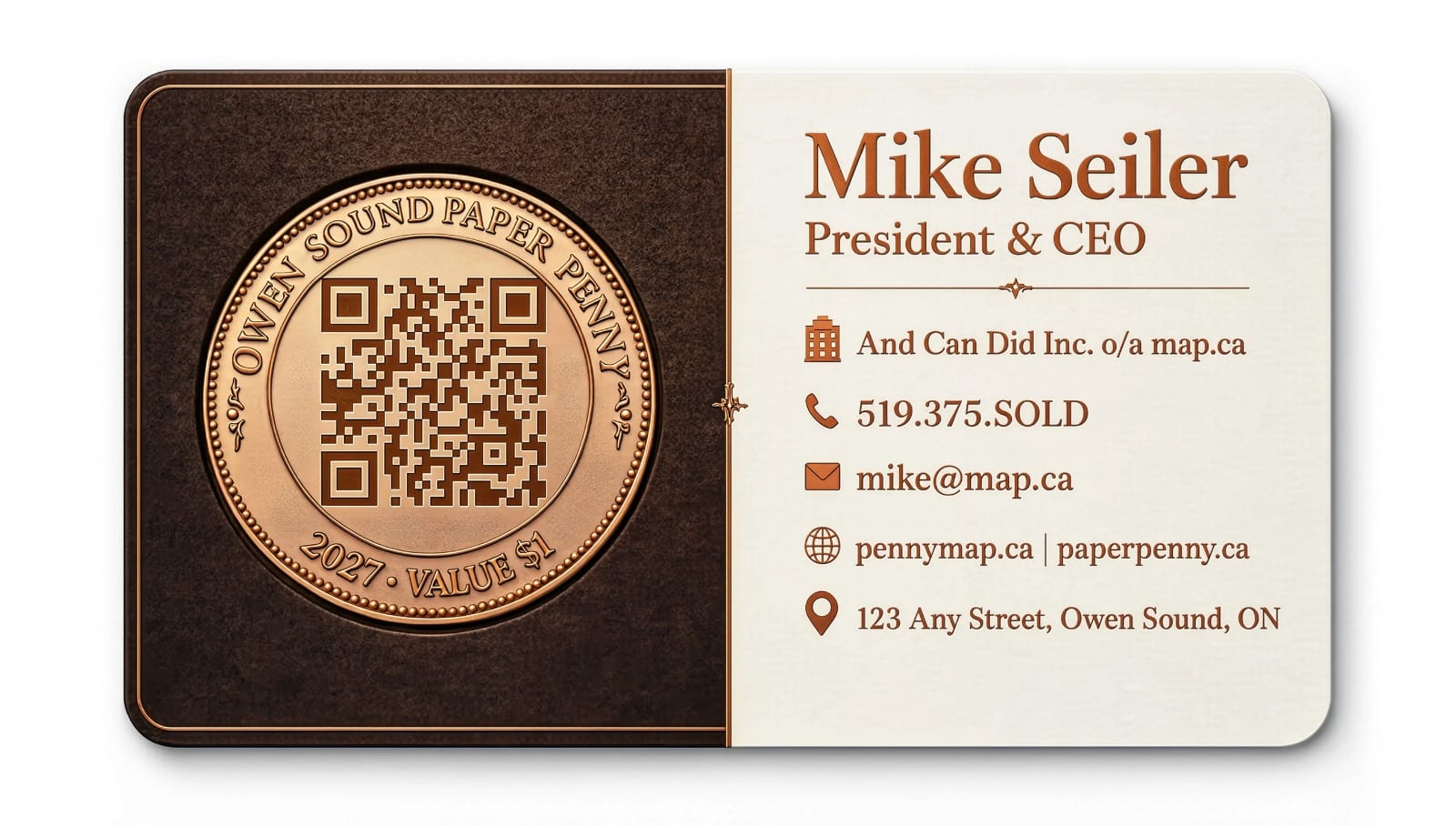
These are the specimen cards for the proposed Owen Sound pilot, front and back. The front has the original copper penny mark, the public status code, and its printed serial number. The back includes the secure redeem code, a grouped manual-entry code, an expiry slot, a city line, and the community-voucher line. A dashed ring surrounds the coin to mark a perforation: you can press out and keep the copper penny disc, and both codes stay on the card. The mark is our own drawing. It is a fictional token rather than a real coin; it has no monarch, no crown, and no Mint design.
Card front (specimen)

The public side includes a QR code that shows the card's status. Anyone can scan it to see its current standing, but it cannot be used to redeem anything.
Card back (specimen)
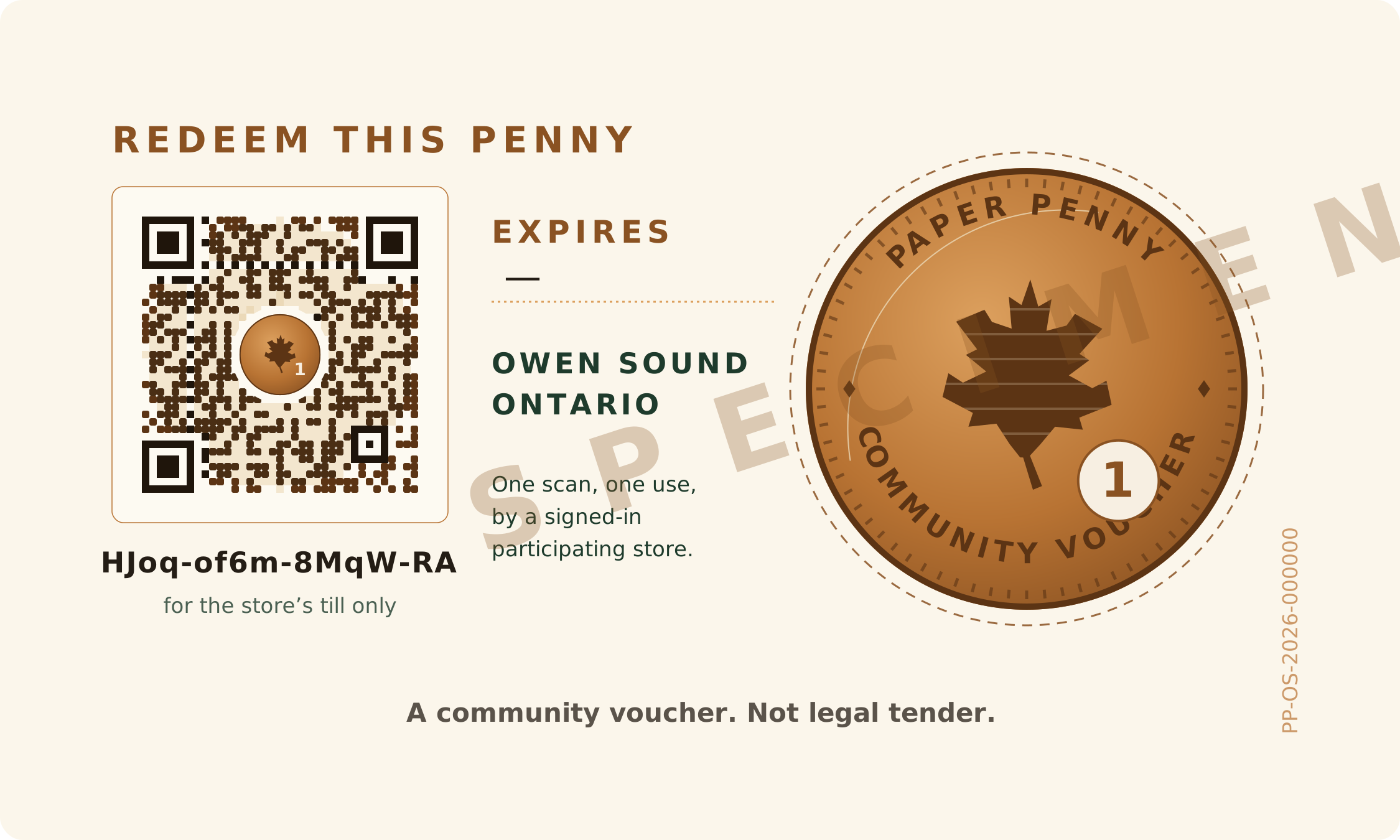
The secure side contains the redeem QR code: a one-time code for a signed-in participating store. The grouped code below it is the same token for manual entry.
Both QR codes on these specimens are genuine encoder output (version 5, error-correction H). The front encodes the reserved specimen serial PP-OS-2026-000000 and goes to the card-check page; the back encodes the published specimen token and goes to the redeem page. You can scan either code with any phone camera. The page will state that the card is a specimen and that nothing is redeemable yet.
The generator, the city registry, and the append-only serial ledger, which stores redeem tokens only as hashes, move with the site's code. These will be published for anyone to read before a print run begins. No machine prints a card that the public cannot inspect.
The Paper Penny is a proposed program. No city has adopted it yet. Owen Sound, Ontario is the proposed first pilot.
Paper Penny is a proposed community project by Mike Seiler (mikeseiler.ca), built on the map.ca stack. It is not legal tender, not a Royal Canadian Mint product, and not yet live in any city. The network map lives at PennyMap.ca.